AI code review is the use of artificial intelligence, typically large language models, to examine proposed code changes and identify potential defects before they are merged. An AI reviewer assesses the changed code alongside the project context it can access, then provides findings for developers to investigate. It can review code written by people, generated by AI, or produced through a combination of both.
In a pull request workflow, the tool retrieves the diff and may inspect related files, tests, and repository instructions. It uses that information to assess how the change could affect the application. For example, if a function starts returning a different data structure, the reviewer may examine its callers and flag code that still expects the previous format. Findings usually appear as comments attached to specific lines, sometimes with suggested fixes.
The scope of AI code review tools varies. Some focus on the submitted diff, while others retrieve context across a repository or connected projects. Their ability to detect a problem depends on whether they can access the relevant code and requirements. Team conventions can be supplied through configuration or review instructions; automatic learning from feedback is a separate capability that depends on the product.
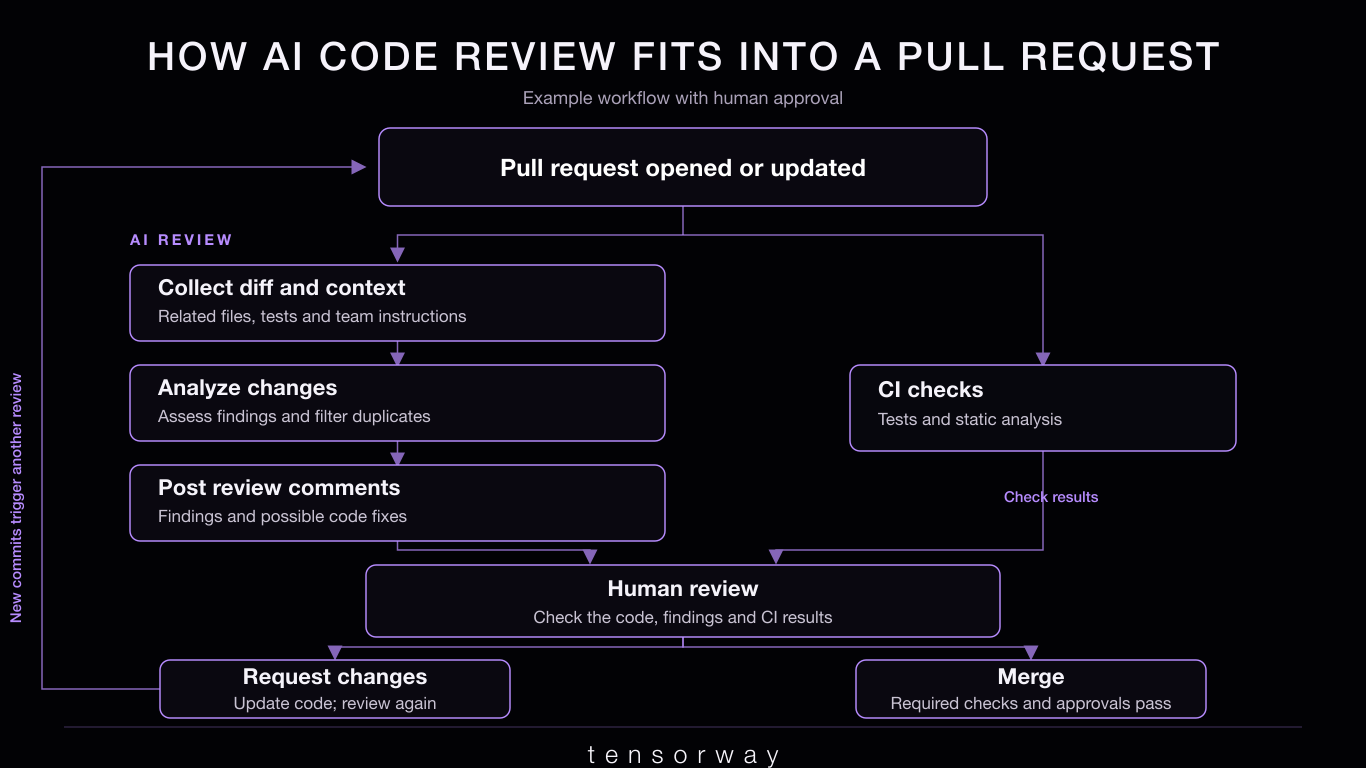
AI review overlaps with static code analysis in the problems it can detect. Static analyzers can identify security vulnerabilities and follow data flows across functions. LLM-based review adds model-generated assessments that draw on code and natural-language context. Teams can combine these approaches with tests to check different aspects of a change.
An AI finding is a claim to verify. The tool may misunderstand valid behavior, miss a dependency, or suggest a fix that breaks another use case. A review with no findings therefore does not establish that the code is correct or secure.
Within the code review process, AI serves as an additional reviewer. Developers remain responsible for checking its findings, testing proposed fixes, and deciding whether a change meets the product’s requirements. Its value comes from the useful defects it helps catch and the review effort it saves, measured against the time spent handling incorrect or unnecessary comments.
To assess that value for your team, plan an AI code review pilot with Tensorway. Test it on your own codebase and measure its impact on reviewer time and confirmed findings before deciding on a wider rollout.