AI Staff Augmentation

Scale your engineering capacity with a pre-vetted AI development team. Skip months of recruiting and ship production-grade AI features in weeks.

What is AI staff augmentation

AI staff augmentation services expand internal technical capacity by integrating pre-vetted AI specialists directly into existing engineering workflows. Your management retains full operational control, while all code, documentation, and intellectual property remain inside your repositories. These engagements typically launch with a dedicated squad of two to five experts covering MLOps, LLMs, AI agents, computer vision, and data engineering.
SEE HOW WE WORK
Watch how our agentic system turns a week of manual work into 5 minutes

Accelerate your operational velocity

Get an engineering assessment to identify where intelligent agentic layers can eliminate processing delays in your infrastructure.

Initiate technical review

AI roles we cover

AI engineer staffing across model development and agentic systems.

 Test candidate fit in your workflow before committing long-term

What you get

What changes when AI team augmentation embeds dedicated specialists into your workflow.

Pre-vetted AI talent

Senior developers are thoroughly evaluated for hands-on production experience, system architecture, and modern AI stacks.

Rapid time-to-market

Add technical capacity in days rather than months, bypassing recruitment bottlenecks and delivering features on schedule.

Direct workflow integration

Engineers work inside your Slack, Jira, and version control, following your established processes and coding standards.

Full code and IP ownership

All source code, documentation, and trained models remain inside your repositories with zero vendor lock-in.

Internal knowledge transfer

Your in-house engineers gain exposure to modern AI implementation patterns, architectural practices, and toolings.

Infrastructure and API сost control

Engineers experienced in prompt optimization, fine-tuning, and vector database management to keep GPU and model inference costs manageable.

Flexible resource scaling

Adjust team composition, size, and technical skill sets as your product roadmap and project demands change.

Zero HR and legal overhead

Eliminate recruitment fees, local employment contracts, compliance hurdles, and benefits management.

AI staff augmentation vs. in-house team

A clear breakdown of timelines, costs, and management requirements for both options.
AI staff augmentation
In-house AI team
Time to first engineer
1-2 weeks
3-6 months per role
Time to a full team
3-4 weeks
9-18 months
Cost structure
Monthly rate, no hiring overhead
Salary, equity, benefits, recruiting fees, payroll
Commitment
Monthly, adjustable between sprints
Permanent headcount
If someone isn't the right fit
Replaced at no cost to you
Performance management, then re-hire
Rare specializations
Available on demand (CV, speech, RAG, agents)
Hard to hire, harder to keep utilized
Best when
Your roadmap needs AI now and the workload varies by phase
AI is your core product and the workload is permanent

AI staff augmentation vs. in-house team

A clear breakdown of timelines, costs, and management requirements for both options.

DAY 1

Discovery

We discuss your AI roadmap, existing tech stack, and skill requirements. A straightforward conversation to align on project scope, timelines, and developer profile.

DAYS 2-4

Matching

We review our network to select developers with relevant experience in similar AI projects. You receive a shortlist of two or three candidates with verified technical backgrounds.

DAYS 5-7

Interviews

You meet the candidates directly to evaluate technical depth, review past production work, and check team compatibility. We handle prior technical screening so you can focus on team fit.

WEEK 2

Onboarding

Once you choose your team, we manage contracts and administrative setup. The specialists receive access to your tools, join your communication channels, and start contributing in your active sprints.

The Business Value of AI Integration

Our AI integration services turn existing infrastructure into an AI-ready environment without rebuilding it:

Healthcare

Diagnostics, clinical documentation, and drug discovery require engineers experienced with regulated data protocols and model validation for patient outcomes.

Typical roles: Computer vision engineers for medical imaging, NLP engineers for clinical records, ML engineers with HIPAA compliant deployment experience.

Finance

Fraud detection, credit scoring, and risk modeling operate under real time processing constraints and strict regulatory standards.

Typical roles: ML engineers for anomaly detection and time series data, MLOps engineers for low latency infrastructure, data engineers for transaction processing pipelines.

Retail & E-Commerce

Demand forecasting, product recommendations, and search systems require architectures built to scale with large product catalogs and handle cold start user profiles.

Typical roles: Recommendation systems engineers, ML engineers for demand forecasting, LLM engineers for conversational search and discovery.

Manufacturing

Predictive maintenance and visual quality control rely on sensor data analysis and computer vision models deployed directly to factory hardware and edge devices.

Typical roles: Computer vision engineers for automated defect detection, ML engineers for time series sensor data, MLOps engineers with edge deployment experience.

Logistics

Route optimization, fleet tracking, and supply planning combine mathematical optimization models with real time telemetry pipelines.

Typical roles: ML engineers for predictive optimization, data engineers for telemetry processing, MLOps engineers for production monitoring.

SaaS

Product teams building generative AI features require dedicated LLM specialists along with infrastructure engineers to support production stability and control API costs.

Typical roles: LLM engineers, AI agent developers, RAG and retrieval specialists, MLOps engineers for model evaluation and cost management.

Clear team composition and exact rates

Share what you’re building and who’s on your team.
FEATURED CASES
USA
Law practice
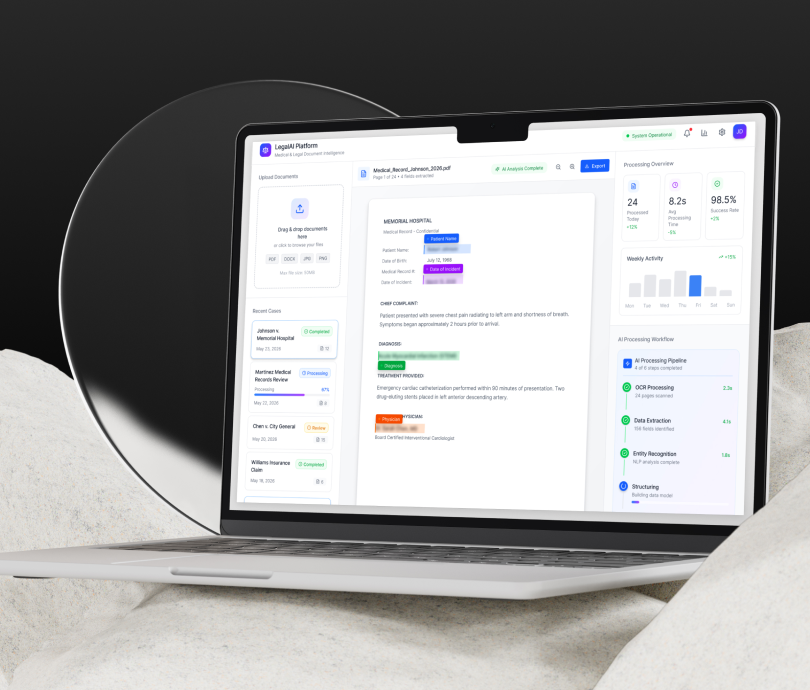
Liner Legal

160x faster document processing for a law firm
Achievements
Speeds up medical record processing 160x (from a week to 5–15 minutes)
Replaces 4 days of manual CRM reconciliation with full automation
Auto-surfaces referral opportunities as a new revenue stream
USA
Fintech

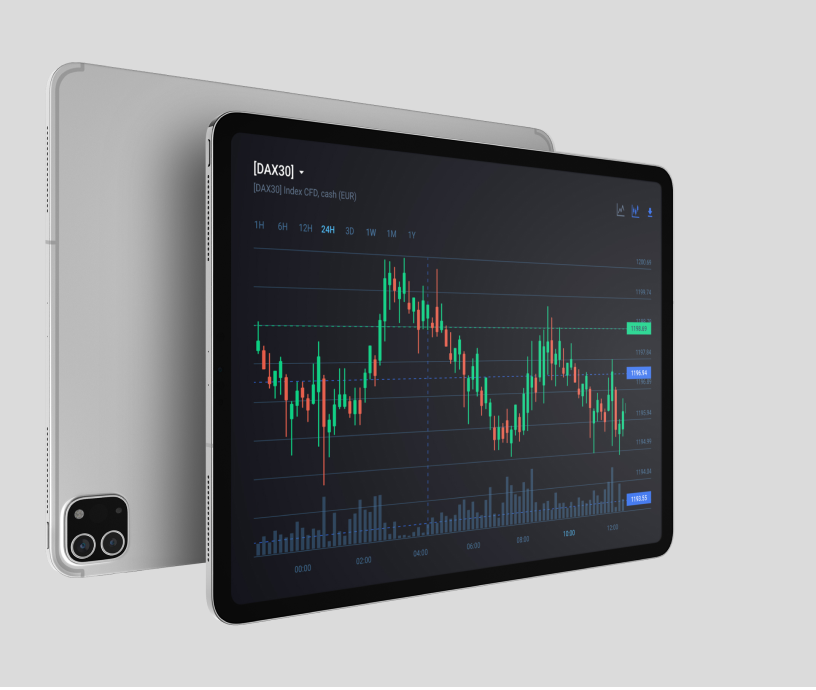
Trading platform with agentic AI for 100k+ investors
Achievements
Speeds up market data processing by 40%
Delivers 90% accuracy in predictive trading analysis
Cuts institutional operational costs by 35%
Sweden
Investment

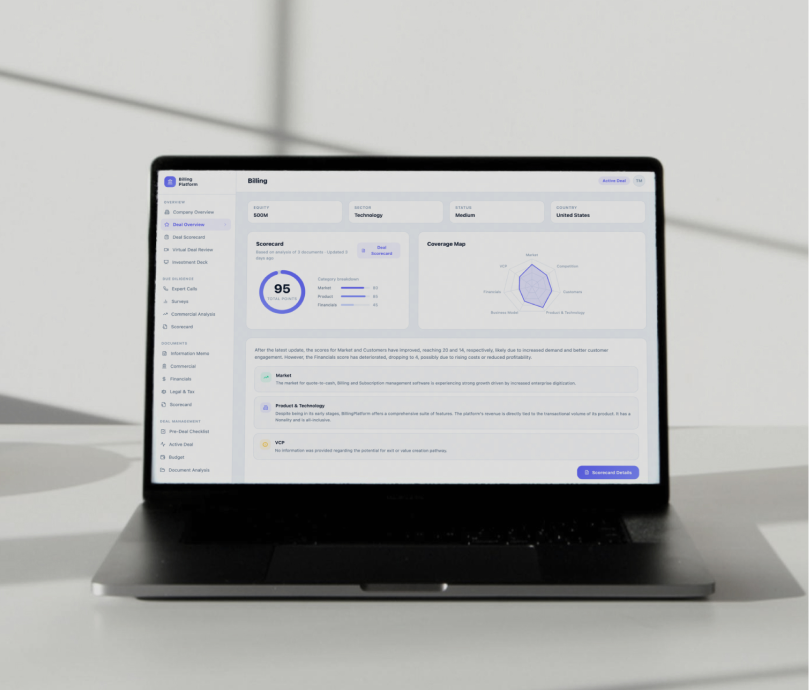
AI agent system for a multi-billion-euro PE fund

Achievements
Cuts deal sourcing time by 80%
Analyzes 5,000+ investment opportunities in hours
Generates pitch decks in minutes
What our clients say

“They're incredibly detail-oriented, proactive in suggesting improvements, and consistently bring new ideas to improve our systems."

Nerina Valladares
Director of Adv., Liner Legal

Engagement Models

Full-time dedicated engineers

Dedicated specialists integrated directly into your daily sprints and team communications. Billed on a predictable monthly rate.

Best for long-term product roadmaps and core development.

Part-time fractional experts

Specialized senior talent for targeted architectural guidance, MLOps setup, or technical reviews. Billed on hourly or weekly allocation.

Best for solving specific technical bottlenecks.

Two-week trial sprint

Start with a two-week initial period to evaluate candidate performance, code quality, and communication style before committing long-term.

Best for testing integration and team fit.

What drives the cost

Years of hands-on experience building, scaling, and maintaining production AI systems.
Niche skills such as MLOps pipeline architecture, edge computer vision, or custom LLM fine-tuning.
The specific combination of data engineers, ML specialists, and infrastructure developers on your team.
Longer dedicated engagements offer more predictable and optimized monthly rates.

Frequently Asked Questions