AI voice agent is software that holds a real-time voice conversation with a person: it recognizes speech, understands the meaning behind it, and replies in a synthesized voice close to natural human speech. Unlike systems that simply read out pre-recorded or scripted phrases, this kind of agent grasps the intent mid-sentence and composes its own response.
At its core sits a loop of three linked components: a speech-to-text tool that converts the caller's words into text; a reasoning engine powered by a large language model (LLM) that detects the speaker's intent and drafts a reply; and a text-to-speech tool that voices that reply and streams the audio back to the caller. All of this has to happen with sub-second latency, otherwise the conversation loses its natural feel.
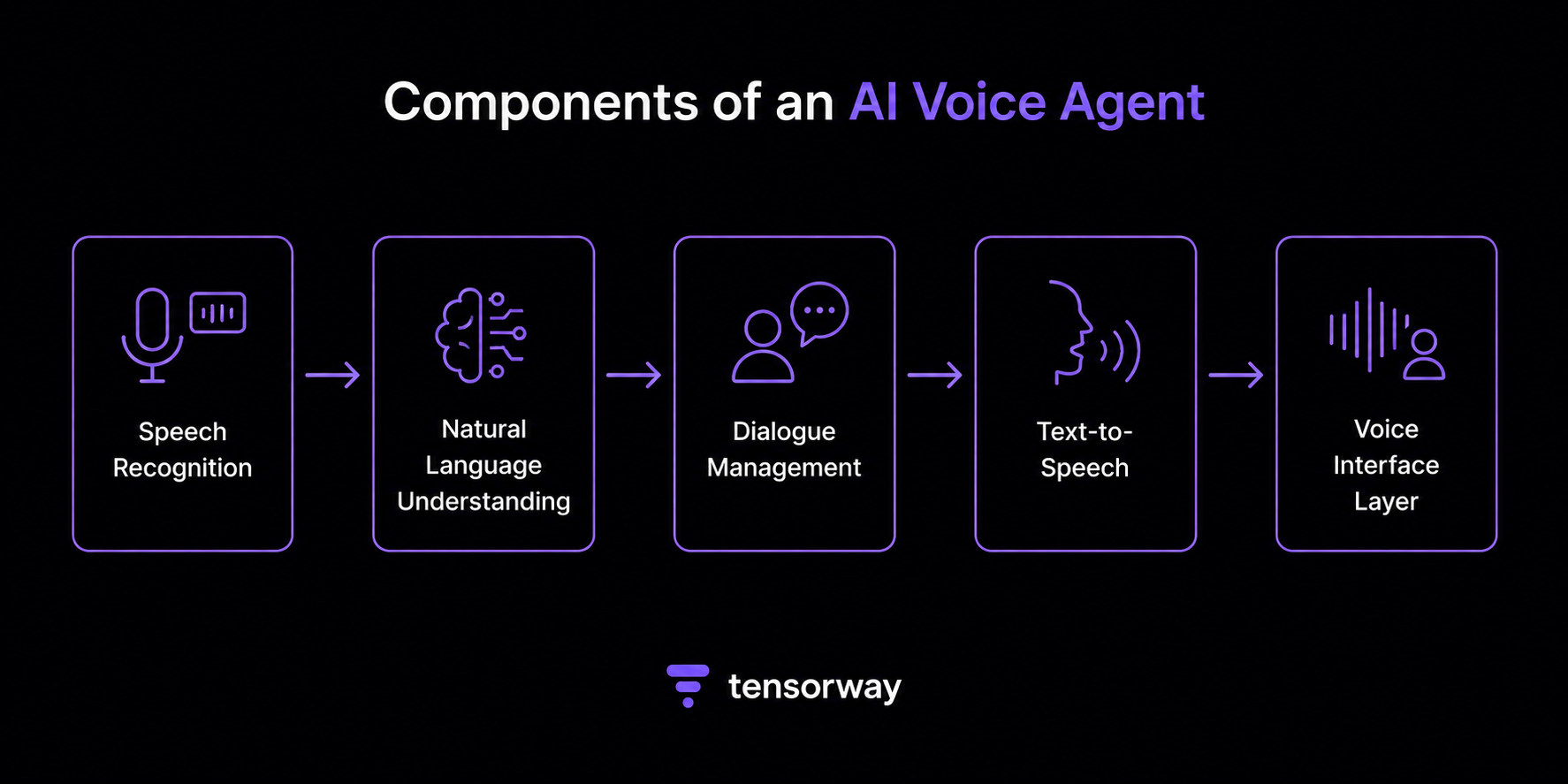
The key distinction from related technologies comes down to two things. Compared with classic IVR systems ("press 1 to..."), a voice agent works with free, unstructured speech, carries on a multi-turn dialogue, retains context across sentences, and adapts when a person changes their mind or interrupts. Compared with text chatbots, it faces a much stricter speed requirement: a three-second pause that feels normal in chat sounds like a glitch in a live conversation, so it needs a dedicated streaming architecture.
More broadly, it is a tool for automating voice communications that takes on high-volume, repetitive tasks such as Tier-1 inbound support, booking and confirming appointments, and initial outbound calls and lead qualification. Its purpose is not to replace entire departments but to lift routine calls off people's shoulders, leaving complex cases to human operators through a well-designed escalation path.